The Adjuster Wrote One Word on the Ramseys' $11,704 Claim Before He Even Opened His Laptop. Every RV Owner Needs to Know What That Word Was.
A campground maintenance man's field notes on the seven places your rig is planning to leak — and the one word your insurance company is waiting to use against you.


Page one of the Ramseys' estimate: $199 an hour, forty-nine and a half hours of floor labor. Mr. Ramsey circled the numbers himself before he sent it to me.
I've run maintenance at a 384-site campground in the Smokies for sixteen years.
I've pumped out flooded rigs, torn up rotten subfloors, and sat with more families at picnic tables looking at repair quotes than I can count.
But the worst part of my job isn't the water. It's what comes after the water — the part with the clipboard.
Because in sixteen years, I've learned that a leak has two prices. There's what the water does to your rig. And there's what one word on an adjuster's report does to your claim.
I watched that word cost one family $11,704.74. Let me show you exactly how it happened — and the eleven-dollar version of the same afternoon, two sites down, one summer later.
The Word Was "Unattended"
The Ramseys were a week-long stay. Nice bunkhouse fifth wheel, two kids. Thursday they left to hike to the falls, and while they were gone, a plastic fill valve behind their toilet — a part the size of your thumb — let go and fed campground water into their rig for five hours.
If you read my post, you know that part of the story. Here's the part I didn't tell you.
The adjuster came out the following Tuesday. Decent guy. He walked the rig with me — I'd helped with the pump-out, so I stuck around. And I watched him do the thing adjusters are trained to do before anything else.
He didn't measure the damage first. He dated it.
Ran his thumb along the swollen edge of the subfloor. Looked at the staining pattern on the vinyl. Checked the darkening on the bottom plate of the slide. And then he asked Mr. Ramsey the question the whole claim hangs on:
"When did the water start?"
And Mr. Ramsey gave the only honest answer he had: "I don't know. We were gone about five hours."
Here's what nobody tells you at the dealership, and it sure isn't in the campground welcome packet:
Your insurance doesn't cover water damage. It covers sudden and accidental water damage. Gradual leaks — the ones that seep for days or weeks — fall under maintenance. Your problem. And when you can't prove when the water started, guess which category the paperwork drifts toward?
The adjuster wrote "unattended" on his notes before he ever opened his laptop. Not because he was a bad guy. Because "five hours, nobody home, no record of onset" is exactly what the gradual-damage box looks like from where he stands.
The Ramseys' claim didn't get denied. It got negotiated — downward, slowly, over six weeks, while their rig sat in a shop and their season ended. They ate a chunk of that $11,704.74 themselves.
One thumb-sized valve. Five hours. And a family with no way to answer one question: when.
Now let me show you what the answer to that question looks like when somebody has one.
Last June, site 141, Carl's phone buzzed on a pool towel: "Water detected — Bathroom Toilet — 2:47 PM."
A timestamp. On record. In an app. Three minutes after the first tablespoon of water hit the floor.
Carl never needed to file a claim — the whole event cost him an $11 valve and half a towel. But if he had? He wouldn't be standing in a wet hallway saying "I don't know." He'd be handing over a log that says the leak began at 2:47, I was notified at 2:47, the water was off by 2:51.

Your Rig Has Seven Leak Zones. I Keep a Ledger on All of Them.
Sixteen years of water calls, and I write every one of them down. Site number, rig, what failed, where the water showed up first. It's a habit from my Army days and it annoys my wife.
But that ledger will tell you something no dealership will: water damage isn't random. In sixteen years I have almost never been surprised by where the water was. Every water connection in your rig lives at the bottom of a box — a dark, flat, closed-door surface that nobody looks at from one season to the next. Before water can rot a subfloor or float your vinyl, it has to do something boring first: pool on the bottom of one of those boxes. Gravity's never missed a day of work.
My ledger sorts those boxes into seven zones. Here they are, in the order they show up:
1. The toilet base & supply valve. The fill valve — the Ramseys' part, Carl's part, the same thumb-sized plastic part in nearly every rig on my loops. Number one by a mile.
2. Under the galley sink. Two supply lines, a P-trap, all shaken down the interstate between every hookup.
3. The bathroom vanity plumbing. Same fittings, smaller box, found later — because nobody stores anything under there worth reaching for.
4. The water heater compartment. Pressure relief valve seeps and tank fitting drips. Outside access door, so guess how often anyone opens it.
5. The water pump & tank connections. Fittings on both sides of the pump. Vibration's favorite meal.
6. The wet bay & city water hookup. Where winter damage from a bad winterization shows up in April — weeks after it happened.
7. The slide-out lower corners. The quiet one — and the expensive one. Seal water tracks down and sits in the corner of the slide floor, and by the time you see it, you're not talking about a repair, you're talking about delamination. The word that cuts a rig's resale value in half.

Look at that list again and notice what those seven places have in common. Not one of them is the roof. Everybody watches the roof. The roof is where amateurs look; the boxes are where the water is. And every one of those zones hides its floor behind a door or a panel you haven't opened since you bought the rig.
Go Open the Cabinet Under Your Sink. Right Now.
Not later. Now — this takes ninety seconds and it's the most useful thing on this page.
Open the cabinet under your galley sink. Move the trash bags out of the way. Now press your fingers flat against the back corners of the bottom panel — the corners, where water settles last and dries slowest.
Dry? Good. Now notice something while your hand is back there:
It's dark. It's flat. And the door you just opened has been closed for how long?
That panel is where your next leak makes its first appearance — my ledger says so, seven zones deep, sixteen years running. And the only inspection it ever gets is the one you just did, on the one day you happened to read this.
The question isn't whether your fittings will hold forever. They won't — they're plastic, they're pressurized, and they ride down the interstate at 65 mph. The question is whether anything will be watching that panel on the afternoon one of them lets go and you're at the pool.
The Ramseys had nobody stationed on that panel. Carl had a palm-sized sentry lying on every one of his. Let me show you exactly what the long-haul guys run — and why it isn't the setup you'd guess.
What the Long-Haul Guys Actually Run
Every campground has its seasonals — the retired couples with sun-bleached decals from parks in nine states, who back into their site in one try and have their awning out before you've finished waving. Twenty-plus years in rigs. They've all been burned once. You can learn more about RV plumbing from their setups than from any dealership walkthrough.
So years ago I started paying attention to what they run, and here's the thing: they've all converged on the same answer. Not the same brand at first — the same rules. Five of them, and every one was learned the expensive way:
One: it has to lie flat on the bottom of the box, probes down — because that panel is where the water reports first, and a sensor mounted anywhere else is watching the wrong place.
Two: it has to scream on its own — a real siren, loud enough to hear from the next site — because campground WiFi is a rumor half the time, and a leak doesn't check the signal bars first.
Three: it has to hit your phone with a time on it. You read the Ramseys' chapter. "Water detected — 2:47 PM" is not a convenience feature. It's the answer to the only question the adjuster asks.
Four: no hub, no monthly fee. These are people who own their rigs outright and pay cash at the fuel desk. They will happily spend money on protection once. The word "subscription" ends the conversation.
Five — and this is the one everybody gets wrong: you don't buy a sensor. One sensor means picking which six zones to gamble on, and my ledger doesn't care which zones you decided to skip. The leak goes where it goes. The old guys buy the bundle — one sensor per zone, all seven, done — because the bundle math is the only math that matches how water actually behaves.
Carl runs Dovelka pucks. So do a growing number of my seasonals — I've watched the little white discs spread across site 141's whole loop like a rumor. Palm-sized, contact probes on the bottom, lies flat on the panel. When pooled water touches it, it does two things at once: sounds a 100-decibel siren you will hear from the pool, and pushes a timestamped alert to your phone over WiFi in seconds. No hub in a cabinet. No monthly bill. A pair of AAA batteries that go about a year — and it tells your phone when they're getting low, which matters, because a dead sensor you think is guarding you is worse than no sensor at all.

When Carl's came in, he did what every one of the old guys does before trusting anything: set one on the picnic table and poured a spoonful of water on it. It went off like a smoke alarm and scared his dog half to death. His phone buzzed before he'd put the glass down. Then he spent one afternoon lying pucks flat in all seven zones — both sinks, behind the toilet, water heater compartment, pump connections, wet bay, and the slide-out corner most people forget.
Total time: about an hour, including the coffee break. No tools. Nothing wired. That hour is the entire difference between the Ramseys' summer and Carl's.
Here's What Changes the Day the Box Arrives
I've watched enough of my guests go through this now that I can tell you exactly how it goes.
The box shows up at your site or your driveway. Inside: seven white pucks, the Leak Zone Guide on a printed card, batteries already in the drawer because they take plain AAAs.
You'll do what Carl did — what everybody does. Set one on the picnic table, pour a spoonful of water on it. It'll go off like a smoke alarm, your phone will buzz in your pocket, and you'll laugh, mostly from relief that the thing does what the page said.
Then one unhurried afternoon, card in hand: both sinks, behind the toilet, water heater compartment, pump connections, wet bay, slide-out corner. Lie them flat, probes down, back corner of each panel. No tools, no wiring, no app engineering degree — if you can set a coaster on a table, you're qualified. An hour, with coffee.
And here's the part nobody expects. It's not the alert that changes things — most of you will go months, maybe seasons, before a puck ever makes a sound. It's the quiet. It's pulling out of the campground for a day hike without doing the anxious mental walkthrough of every fitting in the rig. It's your wife not asking "did you check under the sink?" because the sink now reports directly to your pocket.
Seven dark, flat, closed-door panels — the exact seven places my ledger says your rig will leak — and for the first time since you've owned it, something is watching every one of them.
You're Not Risking Anything to Find Out
Here's the deal, and I'd tell you to demand this from anybody selling you safety equipment:
Test it the day it arrives. Spoonful of water, picnic table. If it doesn't scream loud enough to annoy your neighbors and hit your phone in seconds, send it all back — 60 days, full refund, no restocking games. That's double what most of this category offers, and it exists because the spoon test settles the question in ten seconds flat.
No subscription — ever. The price on this page is the last money Dovelka gets from you. No monthly fee, no "premium alerts" tier, no hub to buy next year.
Honest battery math. About twelve months on 2×AAA — not the three-year fairy tale some brands print — and the app warns you when they're running low. A sensor that dies silently is worse than no sensor. This one doesn't.

60-Day Money-Back Guarantee.
Cover Every Zone in One Afternoon
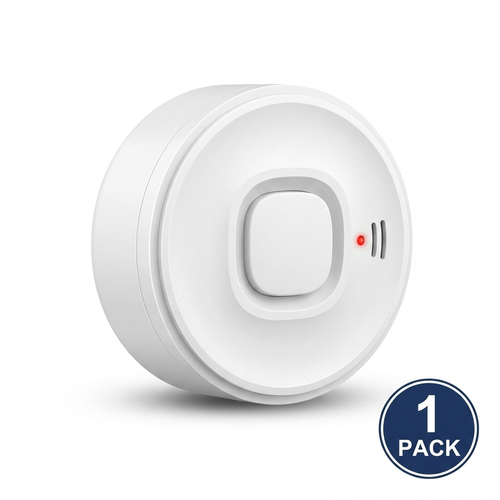
Single Unit
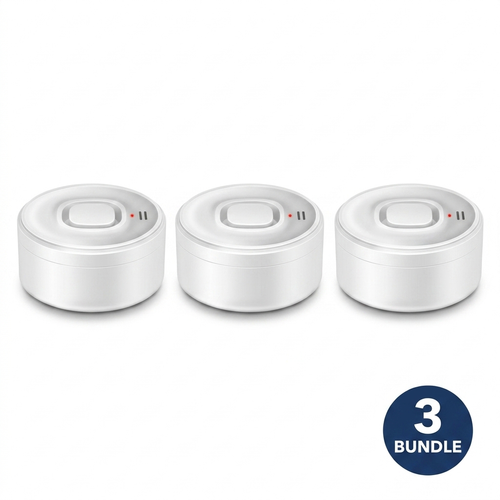
Buy 2 Get 1 Free

Buy 4 Get 3 Free
Every Dovelka system ships with $45 in FREE gifts:
Sixteen years of pumping out other people's rigs, and the pattern has never broken once: it's never the oldest plumbing. It's whoever had nobody watching the bottom of the boxes.
Now you know where your rig is planning to leak. You've touched the panel yourself.
Go enjoy the pool. Let your phone watch the boxes.
— Dale Hutchins, Campground Maintenance, Smoky Mountains, TN
Results and experiences described reflect individual customers and may vary. Insurance coverage and claim outcomes depend on your policy and insurer.

Dovelka™ RV Water Leak Detector — Full RV Protection
- 100dB siren — works with zero WiFi
- Timestamped phone alerts in seconds — even 1,200 miles away
- No hub · No subscription · Ever
- 1-year battery + low-battery warning
- One sensor per leak zone — all 7 covered
- Ships with $45 in FREE gifts
"Set one on the driveway and poured water on it before I trusted it. Scared the neighbor's cat. All seven are in the rig now."
"Our campground WiFi is garbage and that was my whole worry. Doesn't matter — the siren is the alarm, the phone is the bonus. Heard it from the fire ring."
"Fill valve behind the toilet, same as everybody. Phone went off while we were at the camp store. Puddle was smaller than a pancake when I got back."
"Dad is 71 and returns any gadget with more than two steps. He had all seven placed before dinner and now shows the app to people at the dump station."
"Six weeks in, 1am, the water heater bay one went off. $14 fitting. My buddy's identical failure last year was a $6,200 floor. That math isn't hard."
"I'm the worrier in this marriage. First trip since we placed them, I slept through the night. My husband says it was worth it for that alone."
"Ran the cheap Amazon ones before. Two died silent — no warning, just dead. These ping the phone when batteries get low. That's the whole difference."
"Adjuster asked me when our little galley leak started. I opened the app and read him the timestamp. Claim went through in nine days. I'll leave that right there."
"Followed the Leak Zone card, all seven spots, maybe 40 minutes. The card is taped inside my cabinet door like they suggested."
"We're the sun-bleached-decal people in this article. Nine units — seven in the rig, two in the house. You stop thinking about it, which is the point."