


Dovelka OdorGuard Pro™
Dovelka OdorGuard Pro™
Dovelka OdorGuard Pro™
The #1 Rated Solution for Litter Box Odor
 One per room. Anywhere the smell lives.
 Breaks the smell apart. Doesn't cover it up.
 Your cat can sleep next to it. That's how quiet.
 No filters, no refills. Nothing to buy again.
BUNDLE & SAVE

Dovelka OdorGuard Pro™
Couldn't load pickup availability
- American express payment method
- Apple pay payment method
- Diners club payment method
- Discover payment method
- Google pay payment method
- Master payment method
- Shopify pay payment method
- Visa payment method
Where do I place my Dovelka?
Where do I place my Dovelka?
Place one per room where cat odor lives:
- Next to the litter box (primary)
- Bedroom (stops morning ammonia buildup)
- Bathroom (if that's where the litter lives)
- Laundry (fabric absorbs everything)
- Living room / entryway (the room guests judge first)
Multi-cat home: one unit per litter box.
Small apartment: two units usually cover everything.
How it works
How it works
Plug it in. It starts working.
Two-stage Bipolar Ion Technology chemically breaks down odor
molecules at the source — ammonia, feces VOCs, all of it —
instead of masking them.
Runs 24/7. Silent. No filters, no chemicals, no refills. Ever.
Returns & Guarantee
Returns & Guarantee
30-Day Money-Back Guarantee.
Smell gone in 30 days or your money back.
If your home doesn't smell fresh, send it back for a full refund.
No questions asked.
Shipping & Delivery
Shipping & Delivery
Processing Time
All orders are processed within 1-2 business days. You will receive a confirmation email once your order has been shipped.
Shipping Time
We deliver within 5–8 business days. Delivery times may vary depending on your location.
Tracking
Once your order is shipped, a tracking number will be provided so you can monitor its progress.
-

Ordered two after a TikTok told me I couldn't smell my own apartment. A week later my boyfriend asked when I moved the litter box. I didn't. That's when I knew.
-

Three cats, 800 sq ft, and $600 wasted on sprays before this. Placed one by each litter box. First date I brought home didn't know I had cats until one walked out mid-conversation.
-

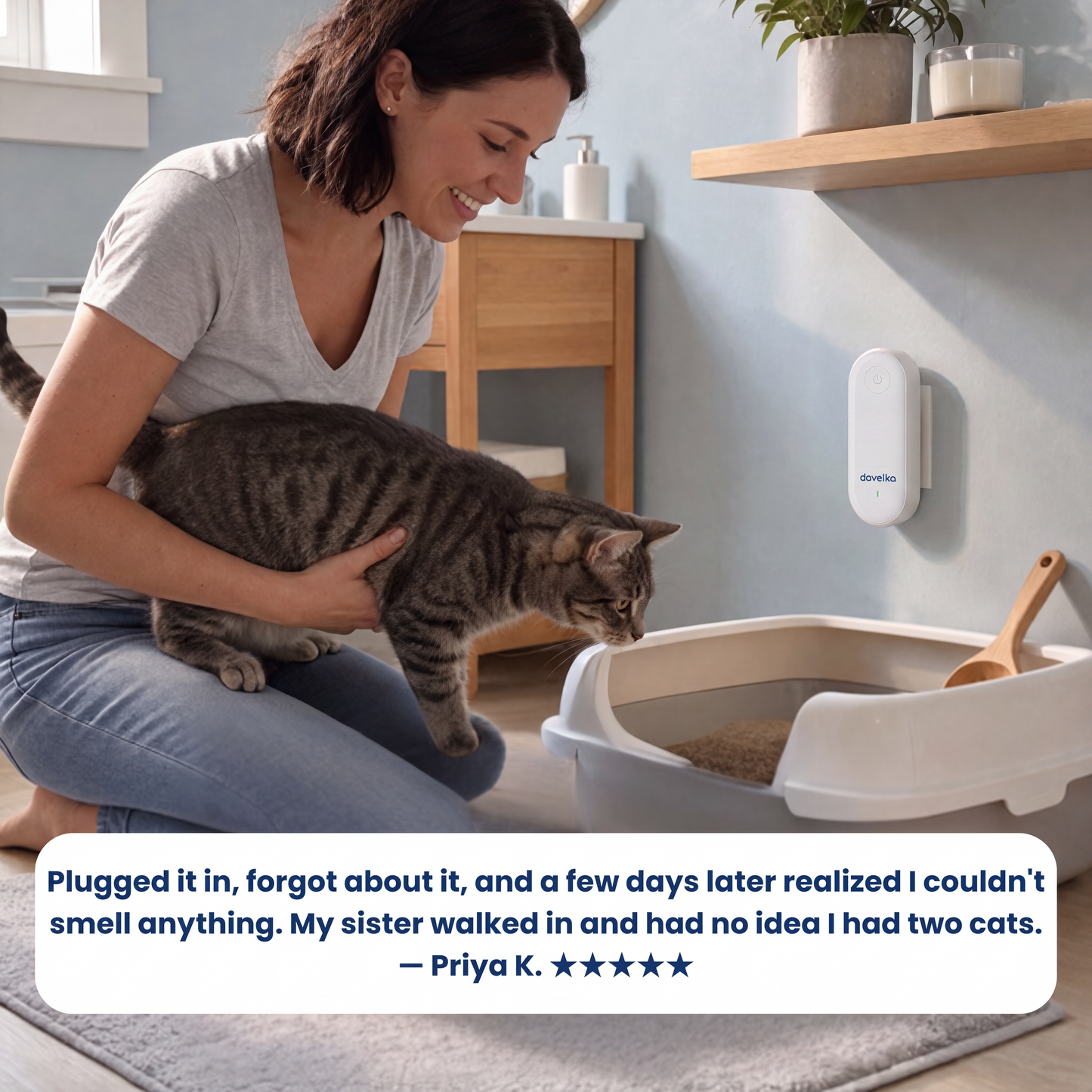
Put one next to the litter box out of paranoia. Two weeks in, my sister walked in — she's allergic, she'd know — and never even sniffed. First time in three years I hosted without holding my breath.


Why Dovelka
Everything that ends "that smell" and keeps it gone.

How To Use?


Vets See This Every Day.
Cat urine breaks down into ammonia — a gas that irritates airways, sits heavier than air, and collects at the level your cat sits at all day. It's the same reason vet clinics run ionizers in their boarding rooms.

The Molecular Cleanse
Sprays don't remove smell. They add another layer on top of it. Candles die in a week. HEPA filters catch dust but let odor walk right through — gas molecules are a thousand times smaller than what a filter can grab.

Everyone Can Smell It. You Can't.
Nose blindness is real. About three weeks after you got the cat, your brain stopped registering the smell. Your guests' brains didn't. Neither did the date you brought home, the friend who's suddenly always busy on Tuesdays, or the coworker who mentioned your sweater.
The Results Speak For Themselves


FAQ
Can I run it while I sleep?
Can I run it while I sleep?
Yes. Dovelka runs continuously at 20dB — quieter than a whisper. Many customers plug one in the bedroom and never think about it again.
Is it safe for my cat?
Is it safe for my cat?
Yes. Dovelka runs at 20dB (below a whisper), has no chemicals or heat, and is certified low-ozone — well below CARB's residential threshold. Safe by sleeping cats. Many customers place a unit within a foot of the litter box.
How does Dovelka work?
How does Dovelka work?
Dovelka releases 50 million negative ions per cubic centimeter. Those ions do two things: they chemically break down ammonia and VOCs from the litter box into odorless water vapor, and they pull airborne odor molecules out of your breathing zone via gravity. Not masked. Not filtered. Broken apart at the source.
How many units do I need?
How many units do I need?
One per room where cat odor is generated or trapped. Typical 1-cat apartment: 2 units. Multi-cat homes: one additional unit per extra litter box. Larger homes: 4–6 units for full coverage.
What size space does it cover?
What size space does it cover?
Each Dovelka covers a typical room — up to about
350 sq ft. For most standard bedrooms, living rooms,
or small studios, one unit near the litter box is
enough.
Larger homes or 3+ cats: one unit per room, or one
per litter box. Bipolar ions don't pass through
walls or solid doors — that's why per-room
placement matters more than raw square footage.